Dental implants are one of the most reliable ways to replace missing teeth. They look, feel, and function like natural teeth, making them a long-lasting solution for restoring your smile. Studies show that dental implants have a long-term success rate of more than 95% when they receive proper care.
While implants are designed to last for many years, their longevity depends on how well you care for them after the healing process. Whether you have a single dental implant or a full-arch All-on-X restoration, a consistent oral hygiene routine and regular dental visits can help keep your gums healthy and your implants functioning at their best.
Why Dental Implant Care Matters
Dental implants are made from durable materials that won’t develop cavities like natural teeth. However, the gums and bone supporting the implant still need proper care. If plaque builds up around the implant, it can lead to peri-implantitis, an inflammatory condition similar to gum disease.
Without timely treatment, peri-implantitis can damage the supporting bone and increase the risk of implant failure. The good news is that these problems are largely preventable. Brushing and flossing every day, along with regular dental checkups and professional cleanings, can help keep your implants healthy and functioning well for many years.
Daily Oral Hygiene for Dental Implants
Keeping your implants clean does not require complicated tools or expensive products. A few simple habits practiced every day make a significant difference in the health of your gums and the longevity of your implant.
Brushing Techniques and Tools
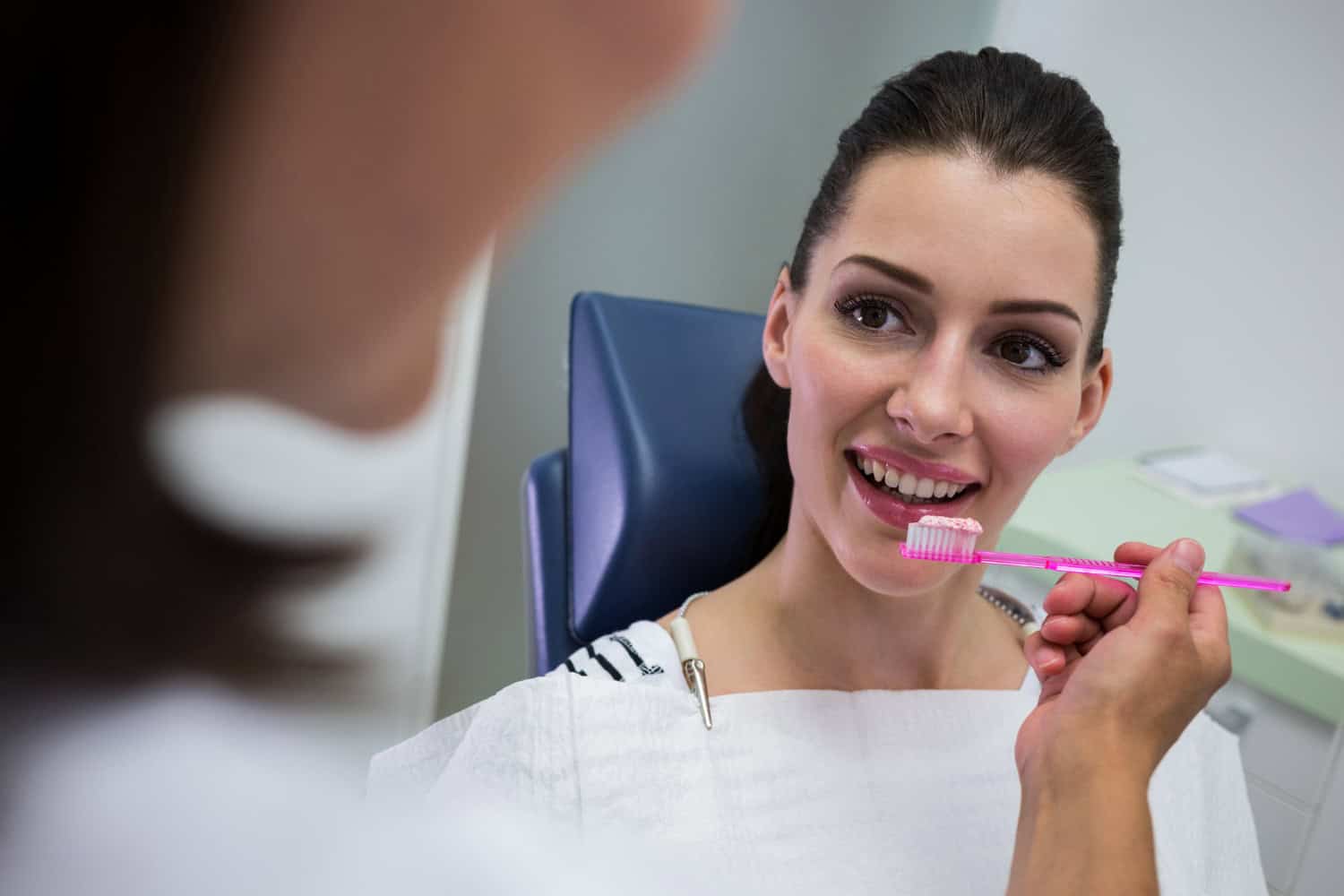
Brush your implants twice a day using a soft-bristle toothbrush or an electric toothbrush. Soft bristles are gentle on the implant crown and surrounding gum tissue, reducing the risk of irritation or scratching. Choose a low-abrasive toothpaste. Harsh toothpaste can scratch the surface of the implant crown over time, creating tiny grooves where bacteria can collect. If you are unsure which toothpaste to use, ask your dentist for a recommendation that is safe for implant surfaces.
Flossing and Interdental Cleaning
Flossing daily is essential for implant care. You need to clean along the sides of the implant and around the abutment, the connector piece that holds the crown. Standard floss can work, but many patients find implant-specific floss or floss threaders easier to use. Water flossers are an excellent option, especially for All-on-X prostheses. When using a water flosser under an All-on-X restoration, set it to low pressure to clean underneath the prosthesis without causing discomfort. Interdental brushes can also help reach areas that floss might miss.
Antimicrobial Mouth Rinse
Using an antimicrobial mouth rinse as part of your daily routine helps reduce bacteria in your mouth and lowers the risk of peri-implantitis. Swish for the amount of time recommended on the product label, usually 30 to 60 seconds. Rinsing after brushing and flossing can reach areas that your toothbrush and floss might have missed. Check with your dentist about which type of mouth rinse is best for your specific implant type and oral health condition.
Foods and Habits to Avoid
Your implant is strong, but it is not indestructible. Certain foods and habits can place excessive stress on the implant or increase the risk of complications.
- Avoid chewing on ice, hard candies, and very hard foods such as nuts or popcorn kernels. These can crack or damage the implant crown.
- Skip sticky foods like caramel, taffy, or chewy candy that could pull at the restoration.
- Do not use your teeth to open packaging, bite nails, or chew on pens or pencils.
- Smoking impairs healing and significantly increases the risk of implant failure. Limiting or quitting smoking is one of the best things you can do for your implant longevity.
- Limit alcohol consumption, especially during the initial healing phase, as it can interfere with tissue recovery.
Caring for Single-Tooth Implants vs. All-on-X Implants
While the basic principles of implant care apply to all types of restorations, there are some differences in how you clean and maintain single-tooth implants compared to All-on-X implants.
| Care Aspect | Single-Tooth Implants | All-on-X Implants |
|---|---|---|
| Brushing | Brush twice daily with a soft toothbrush | Brush twice daily, paying close attention to the gumline beneath the prosthesis |
| Flossing | Daily floss or implant-specific floss | Water flosser on a low setting plus interdental brushes |
| Food precautions | Avoid hard and sticky foods | Avoid hard and sticky foods |
| Professional cleaning | Every six months | Every six months |
| Mouth rinse | Antimicrobial rinse recommended | Antimicrobial rinse recommended |
Single-tooth implants are cared for much like natural teeth: brush, floss, avoid damaging foods, and see your dentist regularly. All-on-X implants require extra attention to the area underneath the prosthesis where food can become trapped. Using a water flosser on a low setting helps flush out debris and plaque that can accumulate in that space.
Professional Care and Regular Checkups
Visiting your dentist every six months for checkups and professional cleanings is a cornerstone of implant maintenance. During these visits, your dentist or hygienist will examine the implant, check the surrounding gum tissue for signs of inflammation, and assess the fit of the crown or prosthesis. Professional cleanings remove buildup that daily brushing and flossing cannot reach, especially in tight spaces around the implant. Regular checkups also allow early detection of any issues, which can be addressed before they become serious problems.
Immediate Post-Surgery Care
The first few days after dental implant surgery are important for proper healing. Give your body time to recover by resting and avoiding strenuous physical activity for the first 24 to 48 hours. Applying a cold compress to the outside of your face near the treatment area can help reduce swelling and improve comfort.
During the initial healing period, choose soft foods such as yogurt, applesauce, smoothies, mashed potatoes, and other easy-to-eat meals. Avoid hot drinks, spicy foods, and crunchy or hard foods that could irritate the surgical site. Be sure to follow your dentist’s post-operative instructions, as your recovery plan may vary based on your individual treatment.
Protect Your Dental Implant from Teeth Grinding
If you grind or clench your teeth, especially while sleeping, the extra pressure can place stress on your dental implant and the surrounding bone. Over time, this force may increase the risk of damage to the implant crown or affect the implant’s long-term stability.
A custom-made night guard helps protect your teeth and implants by cushioning the pressure created during grinding or clenching. If you think you grind your teeth at night, talk to your dentist about whether a custom night guard is the right solution for you. Wearing one consistently can help protect your implant and support its long-term success.
Why Choose Willow Dental for Dental Implant Care?
Frequently Asked Questions
How long do dental implants last with proper care?
With proper care, dental implants can last for decades and, in many cases, a lifetime. Maintaining good oral hygiene, avoiding habits like smoking or chewing hard objects, and visiting your dentist regularly all contribute to their long-term success. While the implant itself is designed to be permanent, the crown or prosthesis may need replacement after 10 to 15 years due to normal wear.
Can I use a regular toothbrush on my implant?
Yes. A soft-bristle manual toothbrush or an electric toothbrush with a soft brush head is safe and effective for cleaning dental implants. Use gentle pressure along with a low-abrasive toothpaste to help protect the implant crown and surrounding gum tissue. Avoid medium- or hard-bristle brushes, as they can scratch the restoration over time.
What should I do if my dental implant feels loose?
A dental implant should never feel loose. If you notice movement, discomfort, swelling, or changes in your bite, contact your dentist as soon as possible. A loose implant may indicate an issue such as bone loss, a loose abutment, or another underlying problem. Early evaluation and treatment can help prevent further complications.
Is it safe to use a water flosser on All-on-X implants?
Yes. A water flosser is an excellent tool for cleaning around All-on-X implants. Using it on a low-pressure setting helps remove food particles and plaque from beneath the prosthesis, reducing the risk of gum inflammation. Your dentist or dental hygienist can demonstrate the proper technique to help you clean the area safely and effectively.