A porcelain crown is designed to look like the tooth it replaces and to hold up under everyday chewing. It is not a permanent, maintenance-free fix, though. Crowns made from materials like porcelain, metal, and resin generally last between five and 15 years with proper care, according to the Cleveland Clinic. The difference between a crown that lasts five years and one that lasts 15 often comes down to the habits around it, not the crown itself.
The good news is that porcelain crown maintenance is not complicated. It looks a lot like caring for the rest of your mouth, with a few extra considerations for the crown edges and the gumline beneath them. Here is what matters, in plain terms.
Why Porcelain Crown Maintenance Matters
People sometimes assume that because a crown is not a natural tooth, it cannot decay. The crown itself cannot get a cavity, but the tooth underneath it can. The margin where the crown meets your natural tooth and gum tissue is the vulnerable spot. Plaque collects there just as it does anywhere else in your mouth, and if it sits long enough, decay can develop under or around the restoration.
Brushing and flossing daily helps prevent decay around the crown, which can jeopardize its lifespan. Skipping those steps increases the risk of gum disease as well. Gum disease matters for crown wearers because receding gums can expose the edge of the crown and the root surface beneath it, which changes how the crown sits and how it looks.
In other words, the crown protects the tooth, but your daily routine protects the crown. Neither one works without the other.
The Daily Routine That Keeps Crowns Looking Good
A simple routine, done consistently, covers most of what porcelain crown maintenance requires. The Cleveland Clinic recommends brushing at least twice a day with a fluoride toothpaste and a soft-bristled toothbrush, plus flossing between your teeth once a day.
Brushing Around a Crown
Use a soft-bristled brush with fluoride toothpaste, and brush at least twice daily. Pay attention to the area around the crown and the gumline rather than rushing past it. That margin is where plaque builds up fastest, and it is the spot most likely to cause trouble down the road.
A gentle, circular motion works better than scrubbing hard. Abrasive brushing does not clean the crown better, and it can irritate gum tissue over time. If your gums feel tender near the crown, back off on pressure rather than skipping the area.
Flossing When You Have a Crown
Floss around every tooth, every day, including the ones with crowns. When flossing next to a crown, slide the floss down gently and let it follow the curve of the tooth instead of snapping it into place. Then wrap the floss around the crown side and clean up under the gumline on that side too.
Water flossers are a good addition to your routine, particularly if you find traditional floss awkward around a crown or bridge. A water flosser can help rinse debris from the margin and around the gumline. It works best as a partner to flossing, not a replacement for it.
Why the Gumline Deserves Extra Attention
The gumline around a crown is easy to overlook because the crown edge can sit right at or slightly below the gum surface. Clean there daily with both a brush and floss. Adding a daily flossing session to deep clean around the gumline is one of the most reliable habits for keeping a restoration comfortable and stable.

Foods and Habits That Shorten a Crown’s Life
Crowns are strong, but they are not indestructible. Porcelain can chip or fracture under the wrong kind of force, and repeated stress on a crown can eventually loosen it or wear down the tooth or opposing teeth.
Avoid biting or chewing on hard or crunchy foods or objects. That includes ice, hard candy, un-popped popcorn kernels, and the everyday habit of chewing on pen caps or fingernails. Hard and sticky foods are two categories worth limiting. Sticky sweets like taffy or caramel can pull at a crown edge and encourage plaque to sit against the margin.
If you grind or clench your teeth, talk to your dentist about protection. Nighttime grinding puts heavy, repeated pressure on crowns and can damage them over time. A mouthguard is worth considering if you grind or play contact sports, since a custom guard cushions the crown against impact and clenching force.
A Quick Reference for Daily Crown Care
| Habit | What to Do | Why It Helps |
|---|---|---|
| Brushing | Twice a day with fluoride toothpaste and a soft-bristled brush | Manages plaque buildup and cleans the area around the crown and gumline |
| Flossing | Once daily, including around the crowned tooth | Prevents decay around the crown and lowers gum disease risk |
| Water flosser | Use as an addition to flossing | Rinses debris from hard-to-reach margins and the gumline |
| Diet | Limit hard and sticky foods | Reduces the risk of chips, fractures, and loosened crowns |
| Grinding protection | Ask about a mouthguard if you grind or clench | Cushions the crown from heavy, repeated pressure |
| Dental visits | Keep regular checkups and cleanings | Lets your dentist catch issues at the crown margin early |
Professional Checkups Are Part of Crown Maintenance
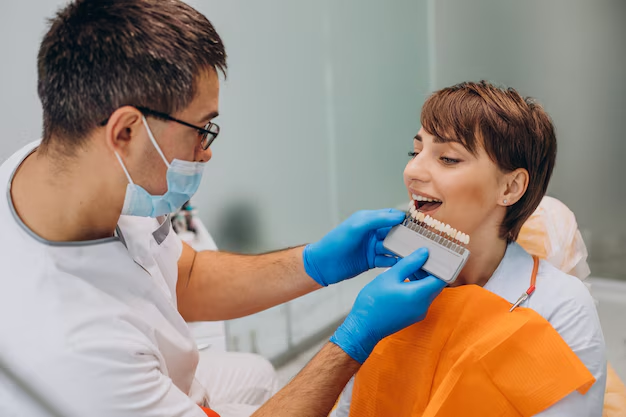
Daily care handles the surface. Regular dental visits handle what you cannot see. Visiting your dentist regularly for checkups and cleanings gives a professional the chance to examine the crown margin, check how the crown sits against the gum, and look for early signs of decay or gum inflammation around the restoration.
At a routine exam, your dentist can also assess your bite and occlusion. If a crown sits slightly high, your bite can shift over time and place uneven pressure on the restoration. Small adjustments made early are usually simpler than problems that develop after years of uneven wear.
Professional cleanings also remove tartar from areas that brushing and flossing cannot fully reach, including right at the edge of a crown. Keeping that margin clean is one of the most practical things you can do for the long-term appearance of a porcelain restoration, since stained buildup near the edge of a crown is often the first thing that makes it look older than it is.
Signs Something May Need Attention
Between visits, keep an eye on how your crown feels and looks. A crown that is functioning well should feel stable and should not cause discomfort when you bite down.
- Persistent sensitivity or pain around the crowned tooth
- A crown that feels loose, moves slightly, or clicks
- Visible chipping, cracking, or a rough edge on the crown
- Gum tissue that looks swollen, red, or bleeds when you brush near the crown
- A change in how your bite feels, or a sense that the crown sits higher than before
- Food catching repeatedly in the same spot around the crown
Any of these is a reason to call your dental office rather than wait for your next scheduled visit. Problems at the crown margin tend to get more involved the longer they go unaddressed, and catching them early usually means simpler treatment.
Habits That Make a Real Difference Long Term
Porcelain crown maintenance comes down to a handful of consistent behaviors rather than anything exotic. Brush twice a day to manage the buildup of plaque, and add a daily floss session to deep clean around the gum line. Keep fluoride toothpaste as your default. Limit hard and sticky foods. Protect your teeth if you grind, clench, or play contact sports. Show up for your checkups, even when nothing hurts.
It also helps to keep your whole mouth healthy, not just the crowned tooth. Gum disease and decay elsewhere in the mouth affect the environment around your restoration. A crown is part of a system, and the system works best when everything around it is cared for.
If it has been a while since your last cleaning and you have a crown that you want to keep looking good for years to come, scheduling a checkup is a reasonable next step. A quick exam gives you a clear picture of how the crown and the surrounding gum tissue are holding up, and a cleaning resets the clock on buildup you cannot reach on your own. Your dentist can then tell you whether anything at the margin needs attention now or just needs watching.
Conclusion
Proper porcelain crown maintenance is simple: brush twice daily, floss around the gumline, avoid damaging habits, and keep up with regular dental checkups and cleanings. These habits can help protect the crown, the underlying tooth, and your overall oral health.
If you have a porcelain crown or are noticing sensitivity, discomfort, damage, or changes around the crown, schedule an appointment with Willow Dental for a professional evaluation and personalized care.
Frequently Asked Questions
How long do porcelain crowns usually last?
Crowns made from materials including porcelain, metal, and resin generally last between five and 15 years with proper care, according to the Cleveland Clinic. Where your crown falls in that range depends on your daily hygiene, your diet, whether you grind your teeth, and how consistently you keep up with professional checkups and cleanings.
Can a porcelain crown get a cavity?
The crown material itself does not decay, but the natural tooth underneath it can. The margin where the crown meets your tooth and gum is the vulnerable area, since plaque collects there just as it does elsewhere. Brushing and flossing daily helps prevent decay around the crown, which can otherwise jeopardize its lifespan.
Is a water flosser enough on its own?
A water flosser is a good addition to your routine, especially around crowns and bridges where traditional floss can feel awkward. It works best alongside daily flossing rather than as a replacement. Standard floss still cleans directly against the tooth and crown surface at the gumline, so using both gives you better coverage.
What foods should I avoid with a crown?
Avoid biting or chewing hard or crunchy foods and objects, and go easy on sticky foods like taffy or caramel. Ice, hard candy, and un-popped popcorn kernels are common culprits. If you grind or clench your teeth, ask your dentist whether a mouthguard would help protect the crown from repeated pressure.
How often should I see a dentist with a crown?
Keep to the checkup and cleaning schedule your dental office recommends. Regular visits let your dentist examine the crown margin, check the surrounding gum tissue, and assess your bite for signs of uneven pressure. Professional cleanings also remove tartar from the crown edge, which helps the restoration look and function better over time.