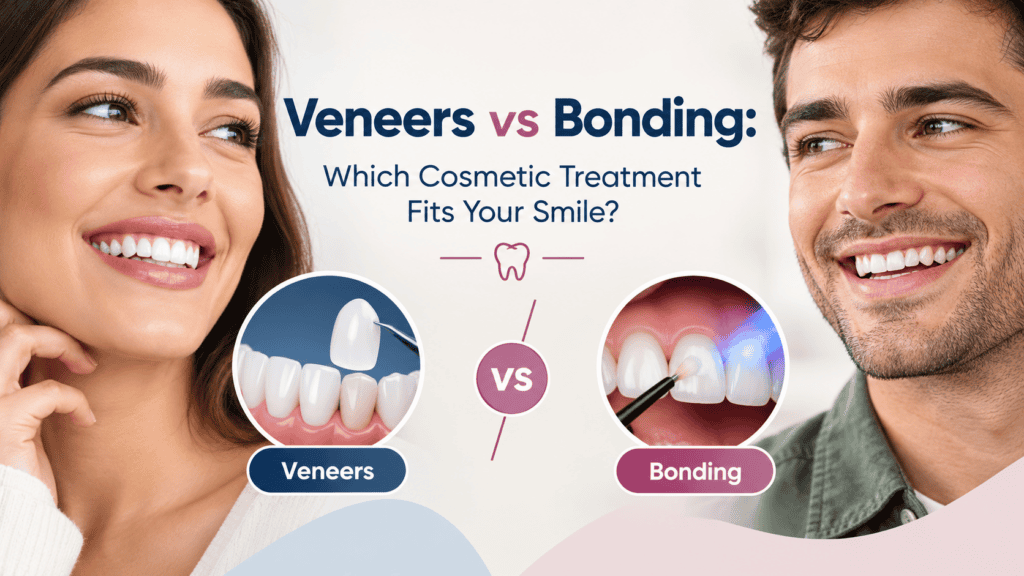
Dental bonding and porcelain veneers are two of the most common ways to improve how your teeth look, and both are offered in general dental practices. The similarities thin out quickly after that. One is a single-visit treatment that leaves your enamel intact and can be undone. The other lasts longer and resists staining, but usually requires removing some tooth structure first, which makes it a permanent decision. Sorting out that trade-off is the fastest route to knowing which one fits your smile.
How Dental Bonding Works
Bonding uses a tooth-colored composite resin that your dentist applies and shapes directly onto the tooth, then finishes before you leave. Because the material is placed by hand rather than made in a lab, the whole thing typically happens in one appointment.
It is also the less invasive of the two options. Sources comparing the treatments note that bonding keeps most of the natural tooth intact, while veneers often require the removal of some enamel. That single difference is why bonding is described as reversible. If you are not ready to change your teeth permanently, or you want to see how a different shape looks before committing, bonding keeps that door open.
How Porcelain Veneers Work
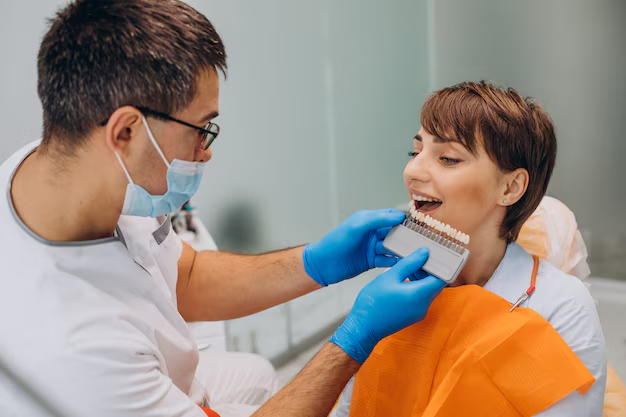
Veneers are thin porcelain shells custom-crafted to fit over the front surface of a tooth. They are made to order, so they involve more than one appointment: one visit to prepare the tooth and take what is needed, and a later visit to place the finished shell.
The payoff is in the finish. Veneers are consistently described as more durable, more stain-resistant, and more polished in appearance than bonding. The cost of that finish is permanence. To place a veneer, some enamel usually has to be removed first, and enamel does not grow back. From that point on, the tooth will need some form of restoration to protect it.
The Core Trade-Off: Reversible or Permanent
Most decisions come down to one line: bonding is cheaper and reversible, while veneers last longer and resist stains but permanently alter the tooth. Neither side of that trade-off is automatically the better choice. It depends on how much you value longevity and appearance against keeping your natural tooth structure untouched.
- Bonding: one visit, most natural tooth structure preserved, reversible, lower cost, shorter lifespan.
- Veneers: multiple visits, some enamel removed, not reversible, higher cost, longer lifespan and stronger stain resistance.
If you have ever been told you have thin enamel, or you have already had work done on a tooth, that history can push the decision in one direction. A dentist can look at the actual condition of the tooth rather than guessing.
Bonding vs Veneers at a Glance
| Factor | Dental Bonding | Porcelain Veneers |
|---|---|---|
| Number of visits | Typically one visit | More than one appointment |
| Natural tooth structure | Most of the tooth stays intact | Some enamel is often removed |
| Reversibility | Reversible | Permanently alters the tooth |
| Typical lifespan | Commonly 3 to 10 years, with some sources narrowing it to 3 to 7 years with proper care | Typically 10 to 15 years, and sometimes longer |
| Stain resistance | Lower than veneers | High |
| Best fit | Quick, affordable improvements | A durable, polished, long-lasting result |
Longevity: What to Expect From Each
Lifespan figures reported in dental sources vary, which is normal for anything that depends on your habits and your bite. Bonding is commonly given a range of 3 to 10 years, with some sources narrowing that to 3 to 7 years with proper care. Veneers are usually listed at 10 to 15 years, and some sources say they can last longer with good maintenance. For context, crowns are sometimes cited at 15 years or more.
Two factors drive those numbers: the material and the upkeep. Porcelain resists wear and staining better than composite resin, so veneers tend to hold their shade and shape longer. Bonding sits lower on the cost scale, which makes it easier to repair or replace when it dulls or chips. Neither treatment is a one-time purchase, and both benefit from regular exams and cleanings.
Cost Considerations
Bonding’s lower price is the most frequently cited reason people choose it. One cost and longevity comparison puts cosmetic bonding at roughly $431 per tooth on average nationwide. That number is a national average rather than a quote, and it can shift based on where you live, how many teeth are involved, and how complex each repair is. The same comparison does not provide a veneer figure, so no reliable veneer cost can be stated here.
If cost is weighing on your decision, ask for a written estimate covering the full treatment for both options before you commit. It also helps to ask what repairs or replacements would cost later, since a cheaper treatment that needs replacing sooner is not always the cheaper path overall.

Matching the Treatment to Your Goals
Because the two treatments solve overlapping problems in different ways, the choice usually comes down to what you want the result to do and how long you want it to do it.
- If you want a fast, affordable improvement with minimal impact on your natural teeth, bonding lines up with that goal.
- If you want a result that resists staining and holds up for many years, veneers are the stronger candidate.
- If you are not ready to commit to an irreversible change, bonding leaves your enamel in place.
- If you want the most durable and polished finish available, veneers are described as the more refined option.
- If the teeth in question already have large repairs or significant damage, ask your dentist whether either treatment is suitable at all, or whether something else makes more sense.
What to Ask Before You Decide
A consultation is where general comparisons turn into a plan for your mouth. Coming in with specific questions keeps the conversation focused and makes the decision easier.
- How much of my enamel would need to be removed, and is this treatment reversible?
- How long should I expect the result to last given my habits and my bite?
- What does the full treatment cost, and what would repairs or replacements cost later?
- What happens if the bonding chips or a veneer needs to be replaced?
- Are there underlying issues, such as gum disease or decay, that should be handled first?
Why the Decision Feels Harder If You Have Avoided the Dentist
People who have put off dental visits for a while often assume that cosmetic treatment means a lecture about the state of their teeth. It does not have to work that way. At Willow Dental in Reading, MA, the approach is comfort-focused and non-judgmental, which matters when the first step is simply getting a clear picture of what is going on in your mouth.
A routine exam and cleaning come before any cosmetic work, since healthy teeth and gums are the foundation for either bonding or veneers. If you have dental anxiety, say so at the start of the appointment. Knowing that changes how treatment is paced and explained, and it means you can ask about bonding as a first step without feeling pressured into something permanent.
Frequently Asked Questions
Is bonding better than veneers?
Neither is better in every case. Bonding is simpler, quicker, less invasive, and reversible, which makes it a good fit for fast, affordable improvements. Veneers last longer, resist stains better, and deliver a more polished result, but they often require removing some enamel and permanently alter the tooth. Your goals and budget decide which one wins.
Are veneers permanent?
They are considered a permanent change because placing them often requires removing some enamel, and enamel does not grow back. Once that structure is gone, the tooth continues to need restoration. Bonding, by contrast, is described as reversible, since it generally leaves most of the natural tooth intact. That difference is often the deciding factor for patients who are unsure.
How long do bonding and veneers last?
Dental sources commonly place bonding at 3 to 10 years, with some narrowing that to 3 to 7 years with proper care. Veneers are typically listed at 10 to 15 years, and sometimes longer. Porcelain also resists wear and staining better than composite resin, which explains much of the gap between the two.
Does bonding stain?
Veneers are consistently described as the more stain-resistant option, so bonding is the material more likely to change color over time. That does not rule it out, especially for smaller repairs. It does mean bonding may need more frequent polishing or replacement to keep matching the teeth around it. Ask your dentist what upkeep your bonding would need.
Can I start with bonding and switch to veneers later?
That sequence comes up often, because bonding is reversible and veneers are not. Bonding can be a way to live with a change before committing to something permanent. Whether it makes sense for you depends on the condition of the tooth and how much enamel remains. Bring the question to your dentist at your next exam.