

When a tooth becomes severely damaged or infected, patients usually face two main treatment options: root canal therapy or tooth extraction. Both procedures are designed to eliminate pain and prevent infection from spreading, but they go about it in very different ways. A root canal works to save the natural tooth, while an extraction removes the tooth from the mouth entirely. The right choice depends on the condition of the tooth, your oral health goals, and your long-term dental wellness.
Understanding the difference between these two procedures can make the decision easier. Root canal treatment focuses on preserving what you already have. Extraction removes the problem completely, but it also removes the tooth forever. Below is a closer look at each option, including the pros and cons, so you can have a more informed conversation with your dentist.
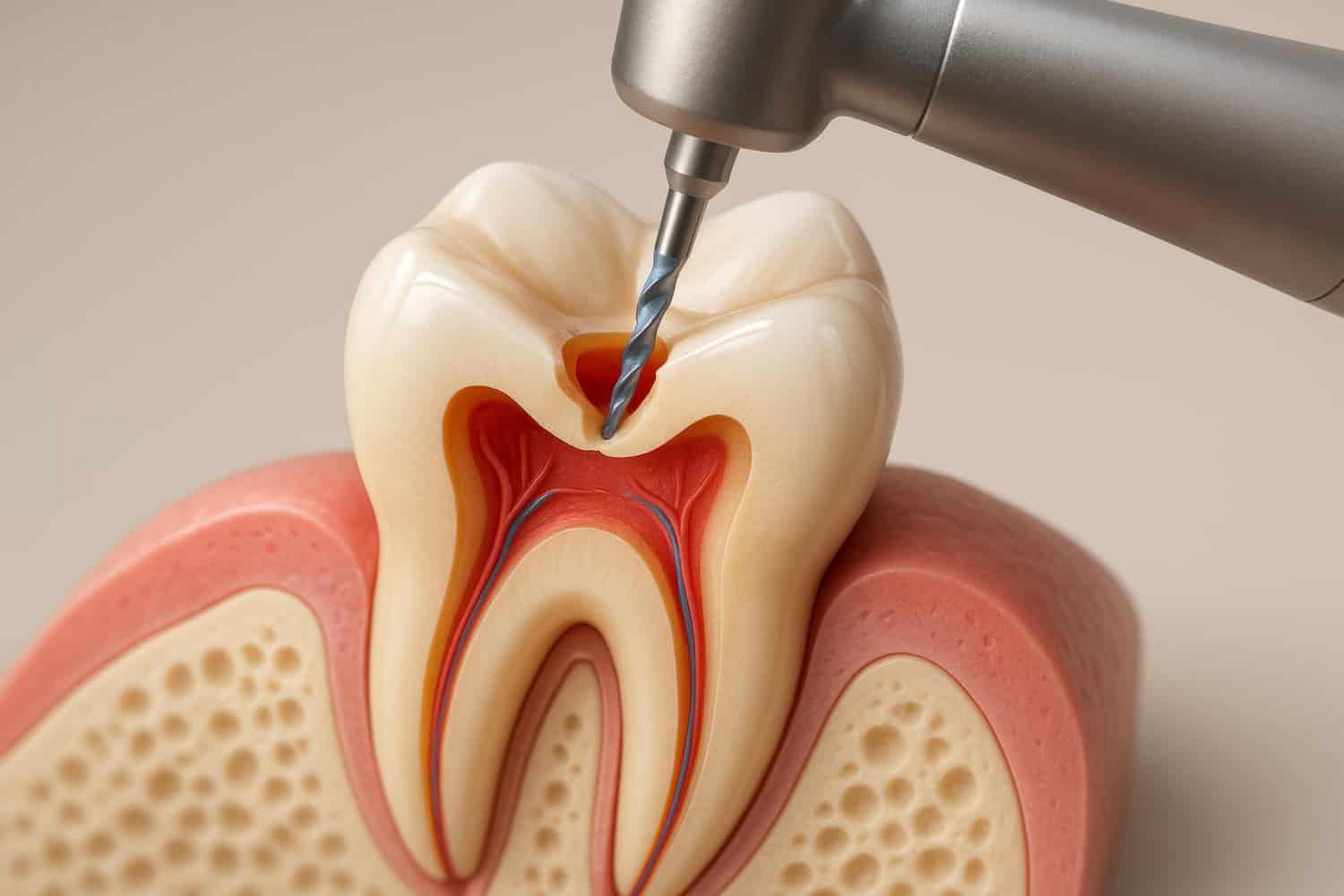
What Is a Root Canal?
A root canal, also known as endodontic therapy, is a procedure used to treat a tooth when the nerve inside it has become irreversibly damaged or infected. During the treatment, the dentist removes the diseased pulp from inside the tooth, cleans and disinfects the inner chamber, and then fills and seals it. This approach helps save the natural tooth structure while providing relief from any pain or discomfort caused by the infection.
Root canal therapy is recommended when a tooth can be saved with treatment. Rather than removing the tooth, the goal is to keep it in place so it can continue to function normally. The procedure prevents the spread of infection and allows you to keep your natural bite and appearance intact. For many patients, this is the preferred path because it preserves the tooth rather than replacing it.
What Is a Tooth Extraction?
A tooth extraction is a procedure in which the dentist permanently removes a tooth from your mouth. Extraction is typically considered when preserving the tooth is not possible. This can happen when the tooth’s structure is too damaged to support a root canal or when other factors make saving the tooth impractical.
Like a root canal, an extraction eliminates the source of infection and pain. The difference is that it does so by removing the tooth completely instead of treating it from the inside. Once a tooth is extracted, it will not grow back, so the removal is permanent. While this approach is straightforward, it also means the natural tooth is gone for good.
Root Canal vs Extraction: Key Differences
Both procedures prevent the spread of infection and pain, but they are quite different in how they go about it. A root canal treats the problem from inside the tooth, while an extraction removes the entire tooth. These differences affect everything from the length of the procedure to the cost and the long-term outcome.
| Factor | Root Canal | Tooth Extraction |
| Goal | Save and preserve the natural tooth | Remove the tooth permanently |
| Approach | Remove diseased pulp, clean, disinfect, fill, and seal | Remove the entire tooth from the mouth |
| Time | Generally involves more complex work | A faster procedure |
| Initial cost | Higher initial cost compared to extraction | Less expensive at the time of treatment |
| Discomfort | Generally less uncomfortable overall | A larger procedure that is often more uncomfortable |
| Long-term outlook | Retains natural tooth structure and smile | May lead to future dental issues |
These differences matter because the choice between a root canal and an extraction is not just about the immediate problem. It is also about what happens to your smile and your oral health in the years that follow.
Pros and Cons of Choosing a Root Canal
Advantages of a Root Canal
- Preserves the natural tooth structure
- Relieves the pain and discomfort caused by infection
- Prevents infection from spreading to other areas
- Helps you retain your natural smile
Because the natural tooth is kept in place, you avoid the need to address the empty space left behind by an extraction. Keeping your own tooth also means your bite and appearance stay closer to what they were before the problem started. For patients who want to preserve as much of their natural dentition as possible, a root canal is often the more attractive option.
Disadvantages of a Root Canal
- Involves more complex work than an extraction
- Carries a higher initial cost than an extraction at the time of treatment
For some patients, the complexity and upfront cost of a root canal can feel like drawbacks. The procedure takes more time and skill to complete, and it is more expensive than having the tooth pulled. However, the investment is often made with the long term in mind, since the goal is to keep the tooth in place rather than remove it.
Pros and Cons of Choosing a Tooth Extraction
Advantages of a Tooth Extraction
- A faster procedure overall
- Less expensive at the time of treatment
- Removes the infected or damaged tooth completely
Extraction can be appealing when time and upfront cost are concerns. Removing the tooth eliminates the source of the problem, and many patients appreciate the simplicity of the approach. In cases where the tooth is too damaged to be saved, extraction may be the only realistic way to stop the pain and infection.
Disadvantages of a Tooth Extraction
- Permanently removes the tooth
- Is a larger procedure that is often more uncomfortable than a root canal
- May lead to future dental issues that require additional care
Once the tooth is gone, the permanent nature of the removal means any future concerns will need to be addressed with additional treatment. This is why dentists weigh the long-term consequences carefully before recommending an extraction. What seems like the simpler choice at first can create new challenges down the road.
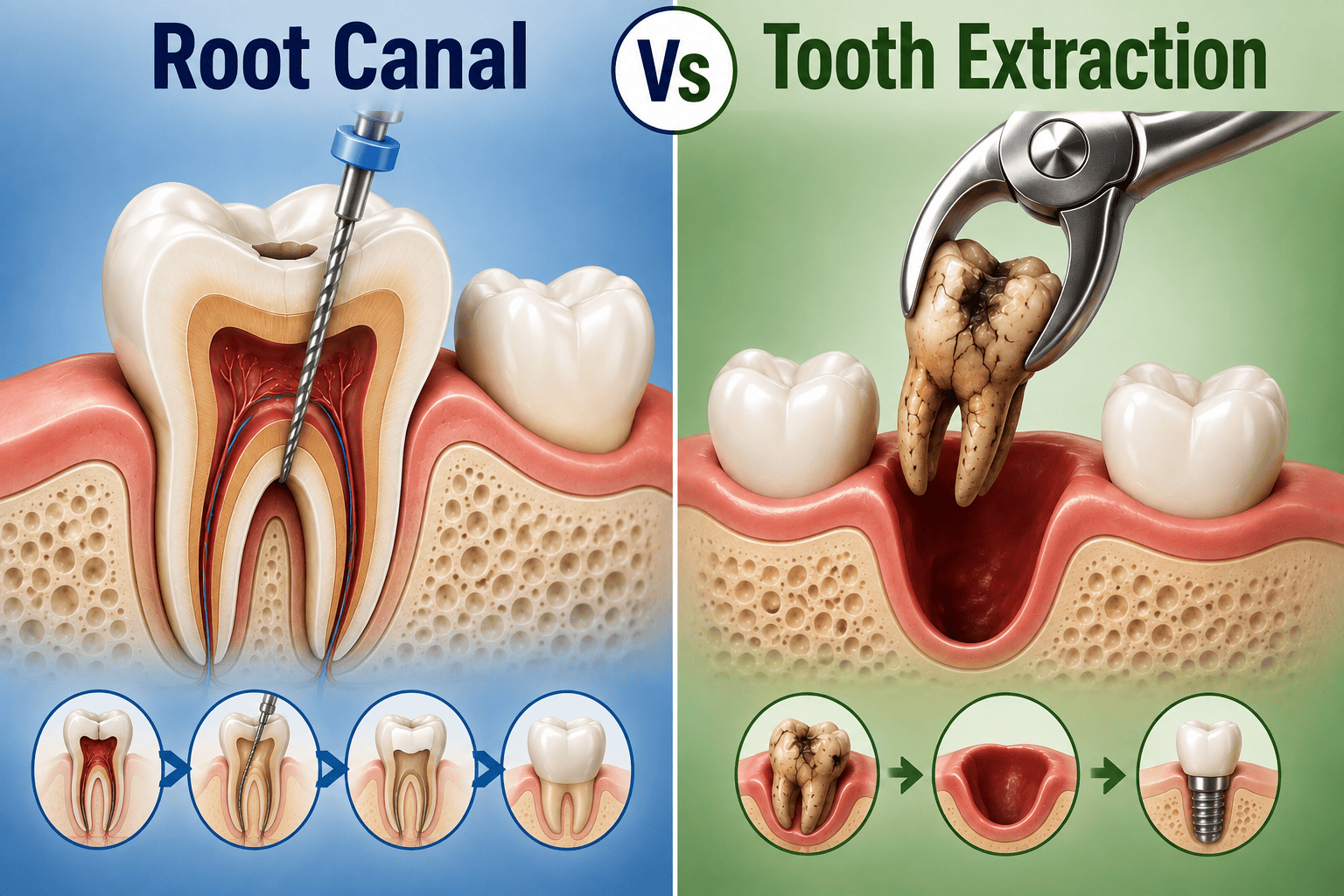
How to Choose Between Root Canal and Extraction
Root canal therapy is recommended when a tooth can be saved with treatment. An extraction is performed when the tooth’s structure is too damaged for preservation. The best choice depends on the condition of the tooth, your oral health goals, and your long-term dental wellness.
In many cases, keeping your natural tooth is the preferred outcome because it allows you to retain your natural smile and avoid the future treatment that can follow an extraction. But when the tooth is too compromised, removing it may be the only option. Your dentist will examine the tooth, explain both procedures, and help you decide which path aligns with your overall dental health.
Comfort and Recovery: What to Expect
Many patients have concerns about root canal discomfort and want to know which procedure causes more discomfort. An extraction is a larger procedure and is often more uncomfortable than a root canal. Both options are designed to eliminate pain and prevent infection from spreading, but the experience around each treatment can differ.
Recovery also looks different for each option. After a root canal, the natural tooth remains in place, which means you do not have to adjust to the absence of a tooth. After an extraction, the tooth is gone permanently, and your dentist will explain what to expect as your mouth heals. The right choice for you will depend on your specific situation and the condition of the tooth in question.
Conclusion
Choosing between a root canal and tooth extraction depends on the condition of your tooth and your long-term oral health. When possible, root canal therapy can preserve your natural tooth, while extraction may be necessary when the tooth cannot be restored. If you are dealing with persistent tooth pain, sensitivity, swelling, or infection, don’t wait for the problem to worsen. Willow Dental can evaluate your tooth and recommend the right treatment for your needs. Contact Willow Dental today to take the first step toward lasting dental health.
Frequently Asked Questions
Is a root canal more painful than an extraction?
Most patients find the opposite. An extraction is a larger procedure and is often more uncomfortable than a root canal. Both treatments aim to eliminate pain and prevent infection from spreading, so your dentist will take steps to keep you comfortable throughout either procedure.
Why would a dentist recommend a root canal instead of an extraction?
Root canal therapy is recommended when a tooth can be saved with treatment. A root canal preserves the natural tooth structure and helps you retain your natural smile. Extraction is considered when the tooth’s structure is too damaged or when preserving the tooth is not possible. Your dentist will base the recommendation on your specific condition and long-term dental wellness.
Is an extraction cheaper than a root canal?
Extractions are generally faster and less expensive at the time of treatment. Root canals involve more complex work and come with a higher initial cost. However, an extraction permanently removes the tooth, which may lead to future dental issues and additional treatment. The long-term picture matters just as much as the upfront cost.
Which option saves the tooth?
Only a root canal saves the tooth. Root canal therapy is done to treat the problem by preserving the natural tooth, while an extraction eliminates the problem by removing the tooth permanently. If keeping your natural smile is the priority, a root canal is the option designed to do exactly that.